Context: The Experience
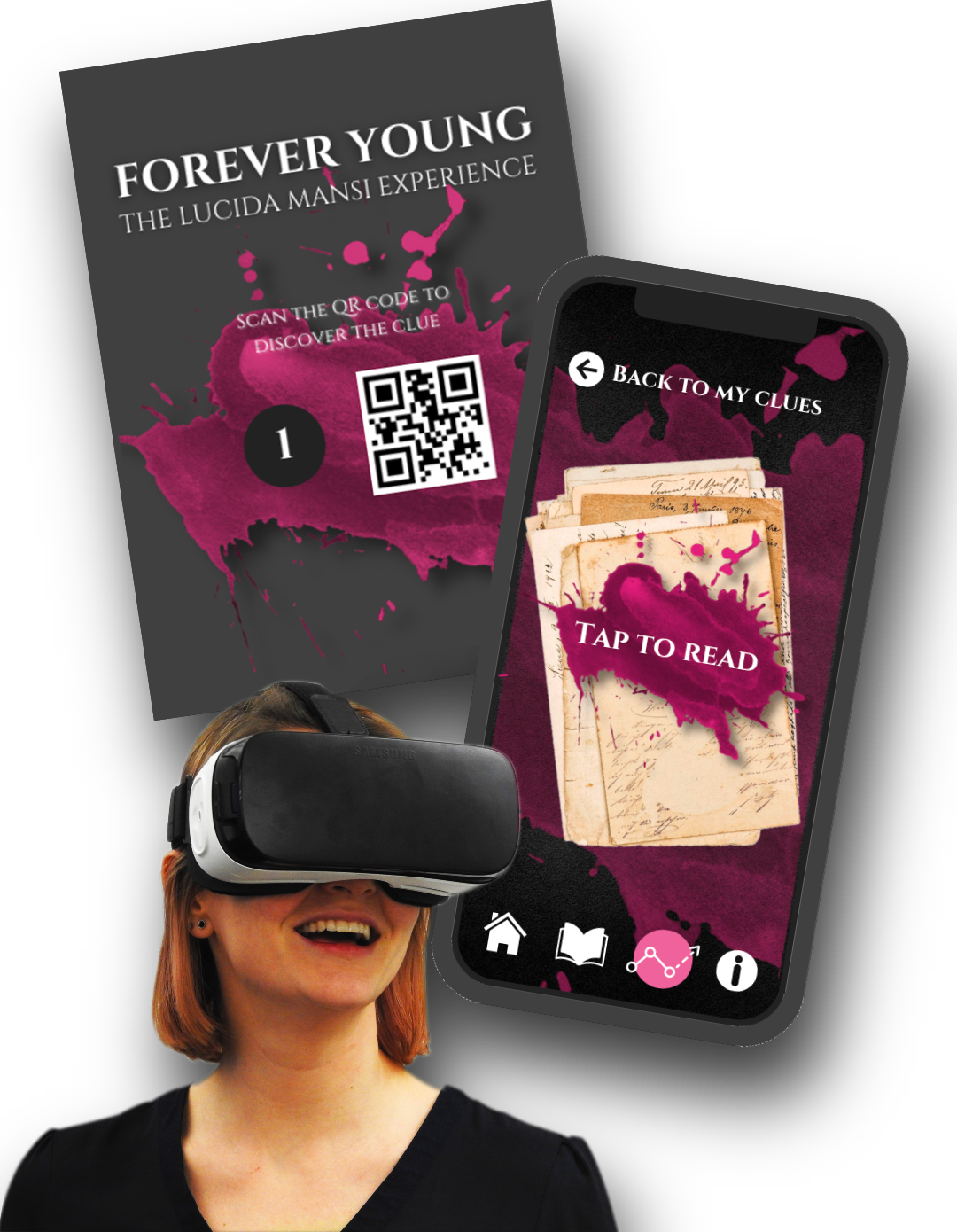
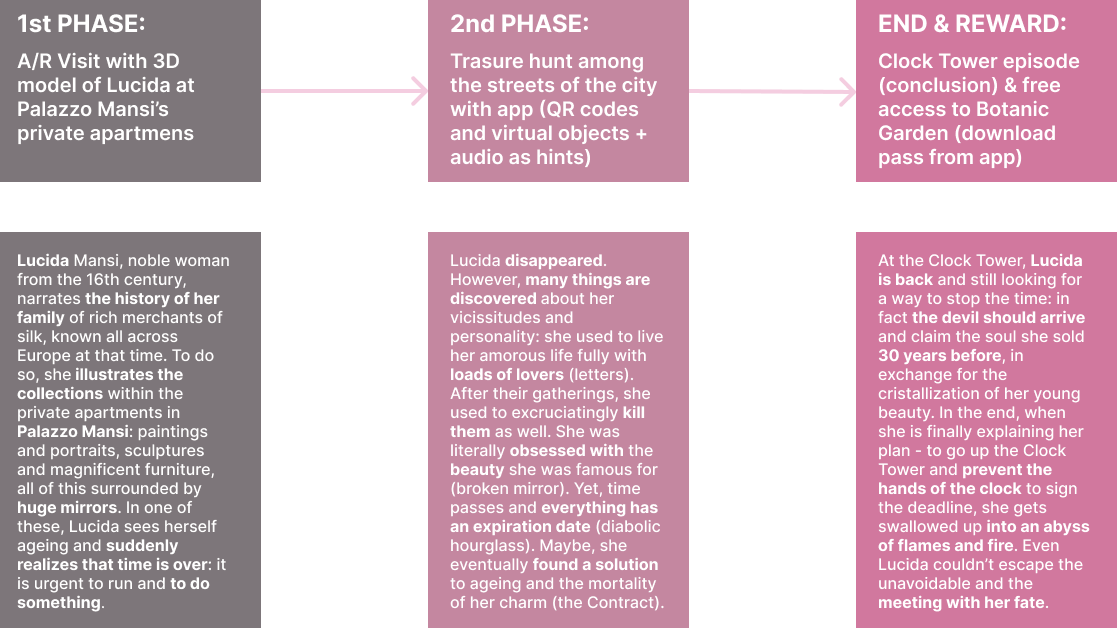
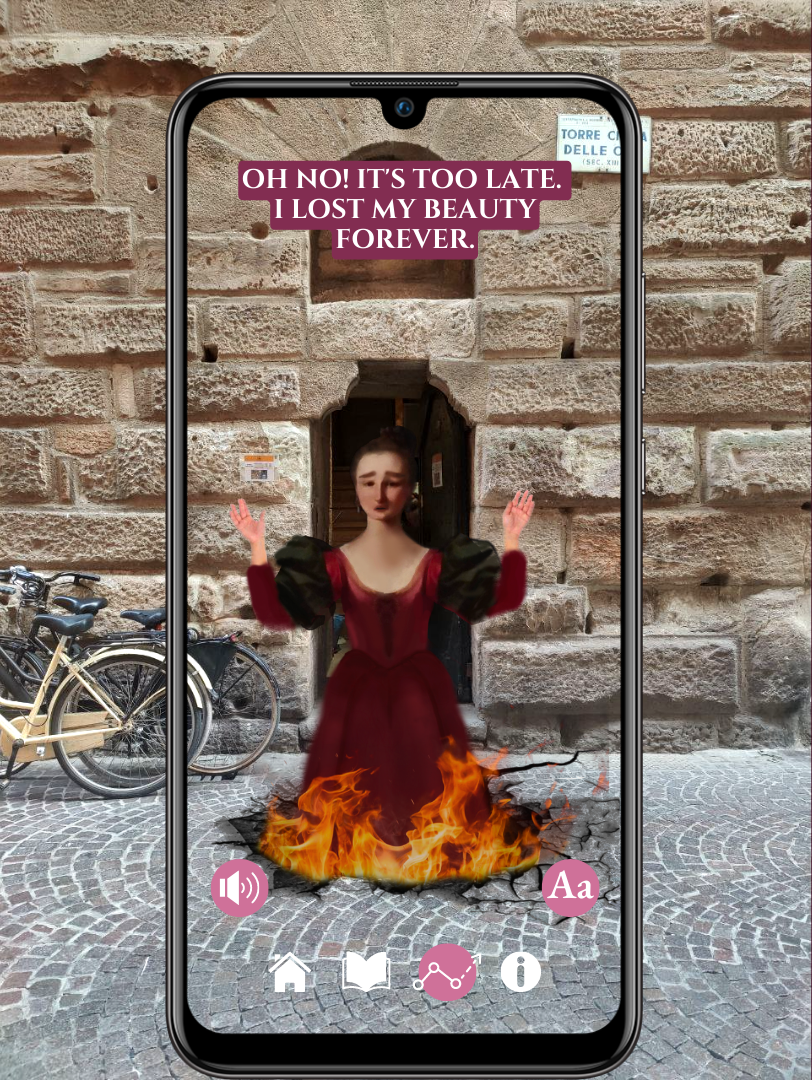
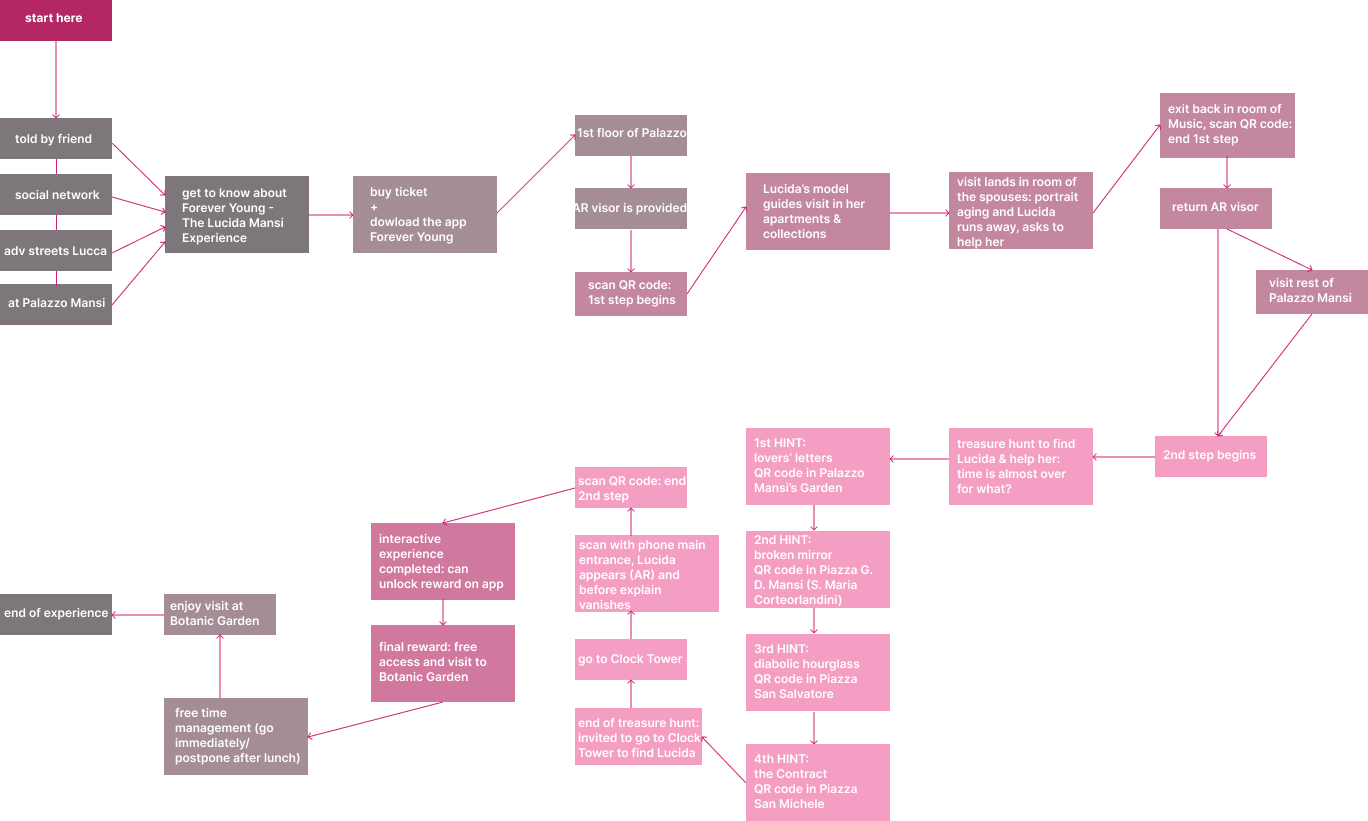
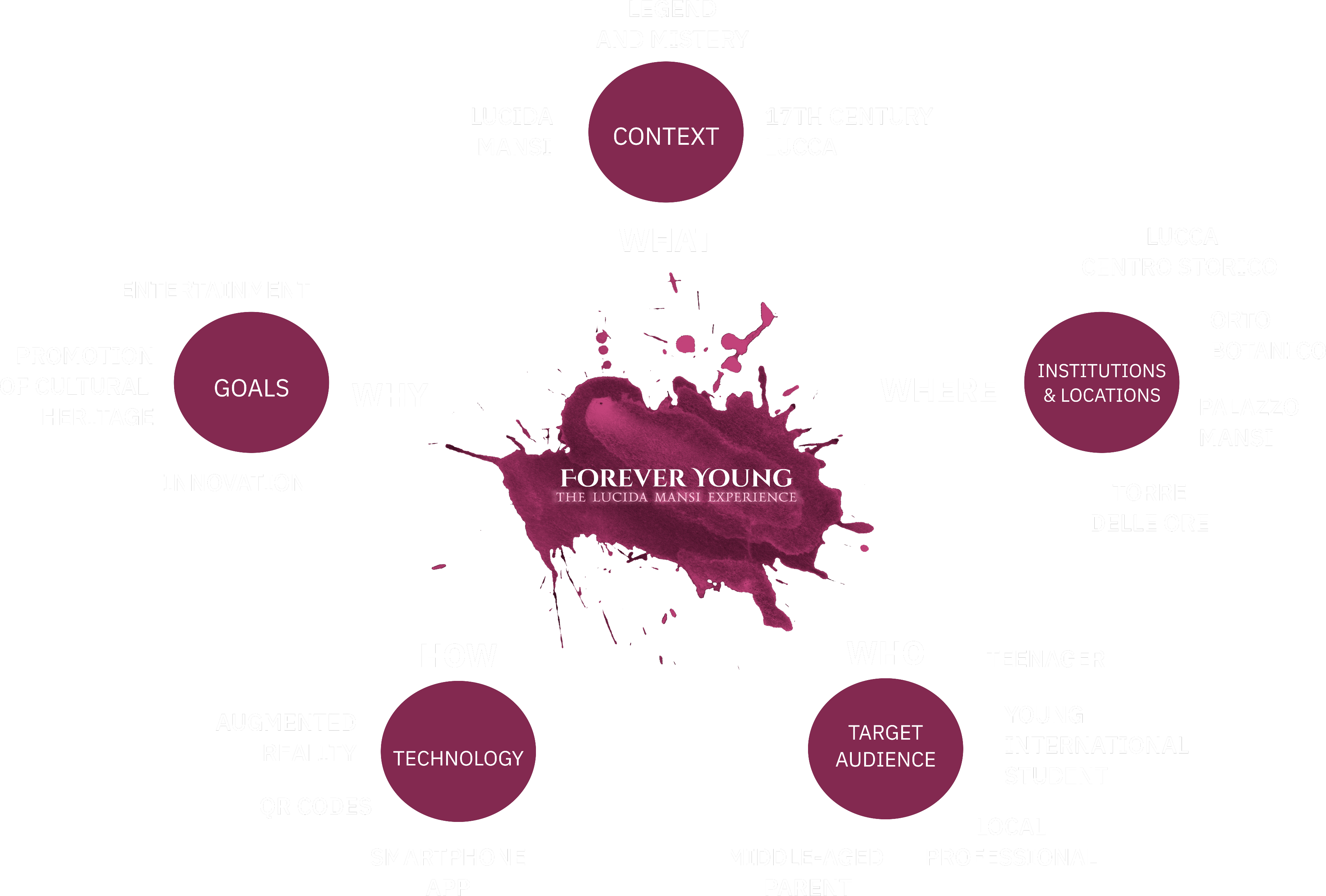
Forever Young - The Lucida Mansi Experience focuses on several locations within the historical city centre of Lucca. We focused on fostering the discovery of the city’s history and lesser known cultural assets. With our interactive path we aimed at picturing the atmosphere of the 17th Century, the period in which our protagonist Lucida Mansi lived, by transmitting a sense of creepiness and mystery around her vicissitudes.
Context: Institutions & Goals
Forever Young involves two main institutions within Lucca: the National Museum of Palazzo Mansi and the Department of Culture, Events and Cultural Institutions of the City Council.
The institutional goal that guided us through the design of the experience is enriching and enhancing the cultural heritage in its custody, ensuring its accessibility and promoting its enjoyment.
Context: Palazzo Mansi
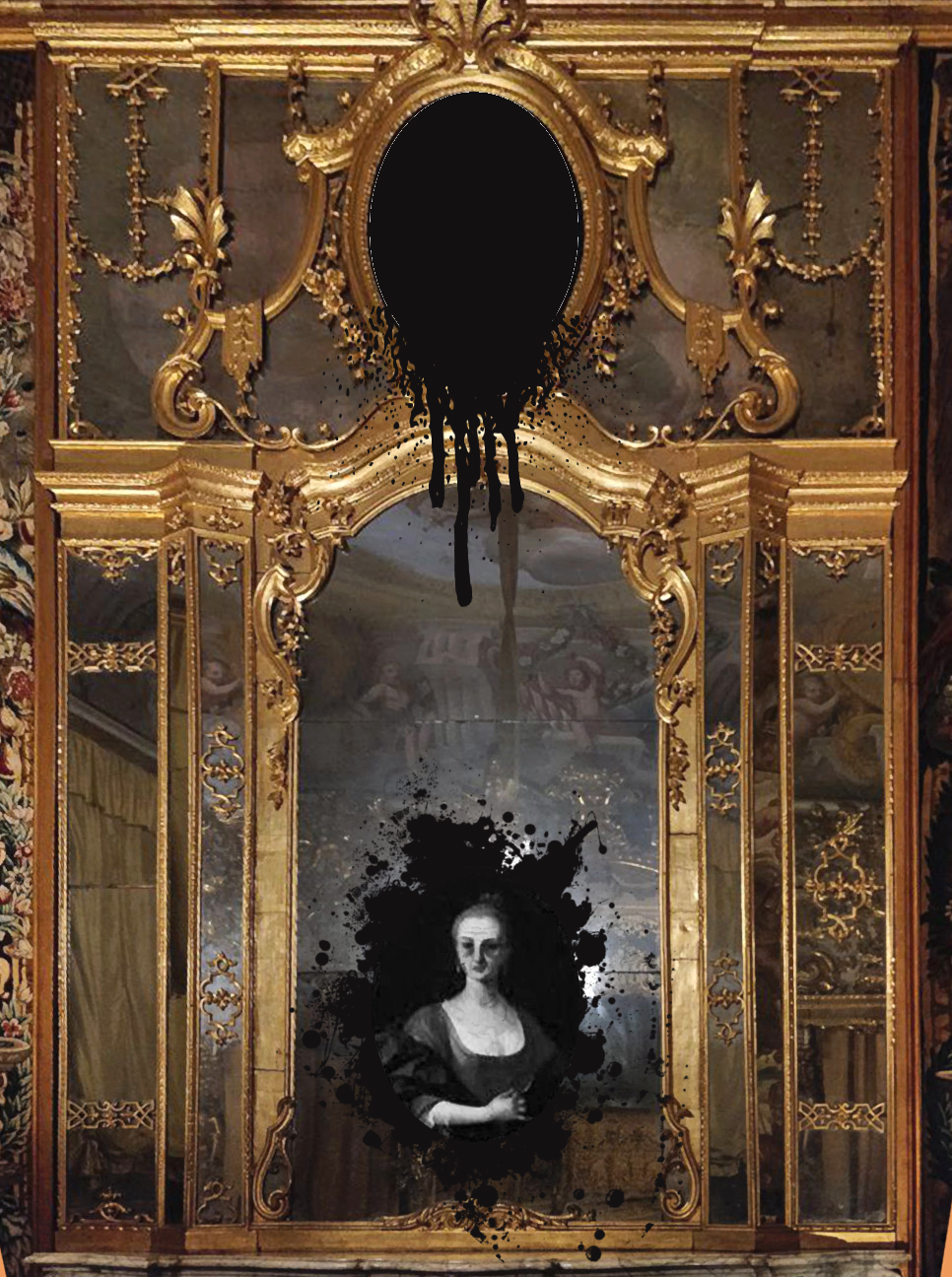
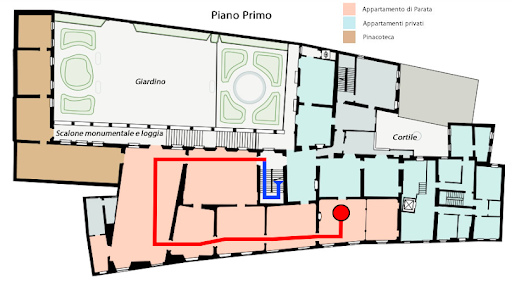
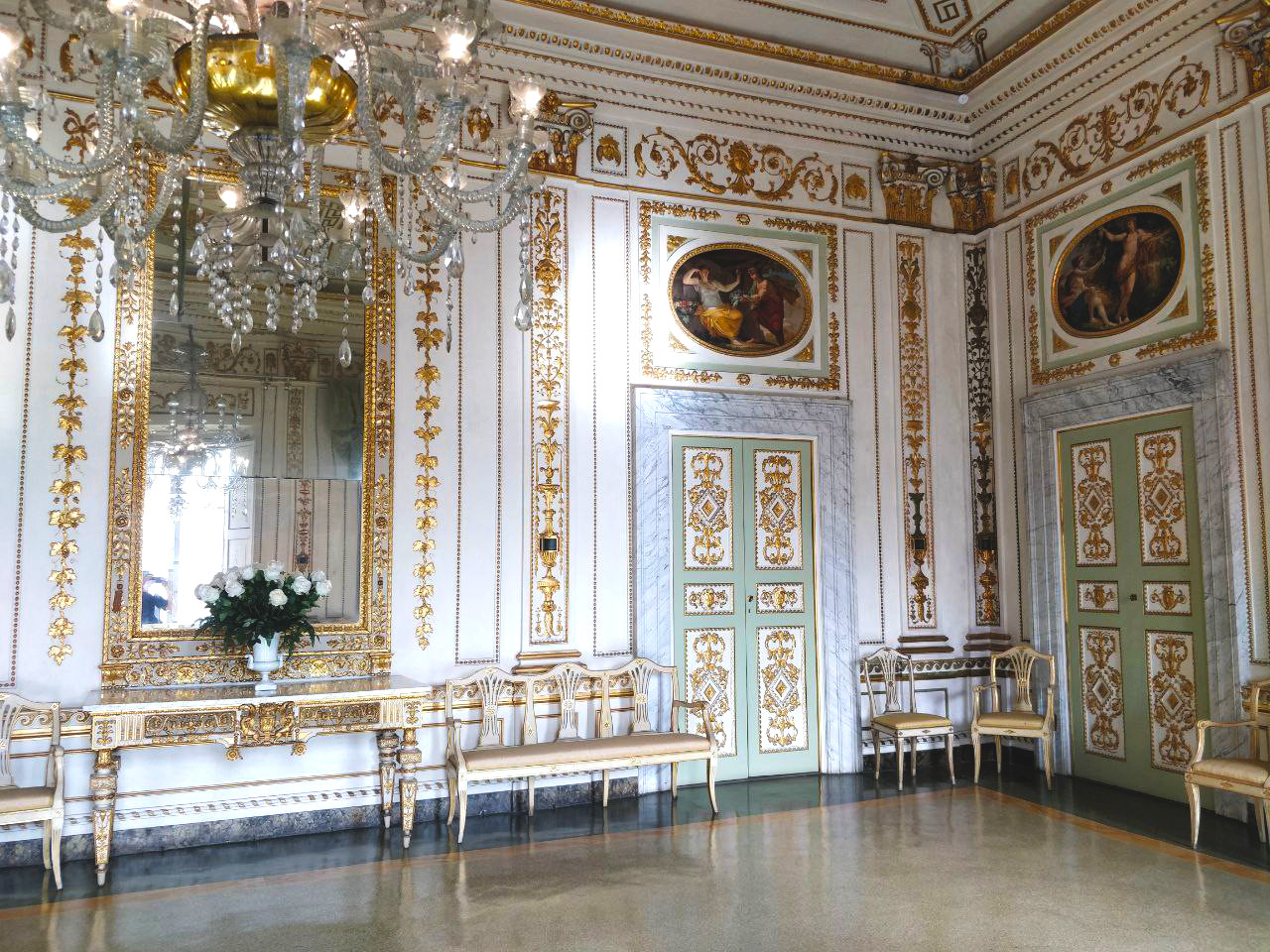
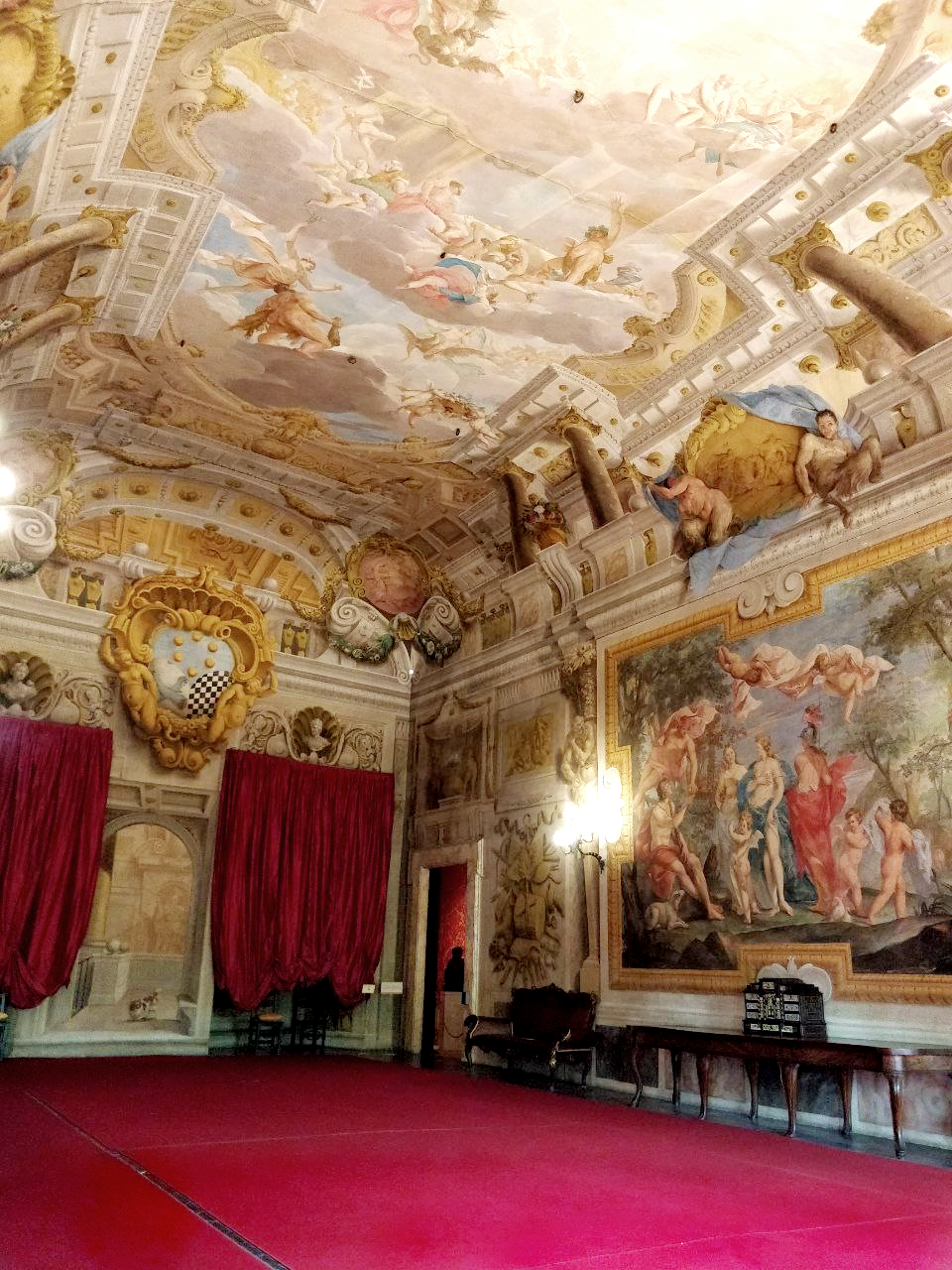
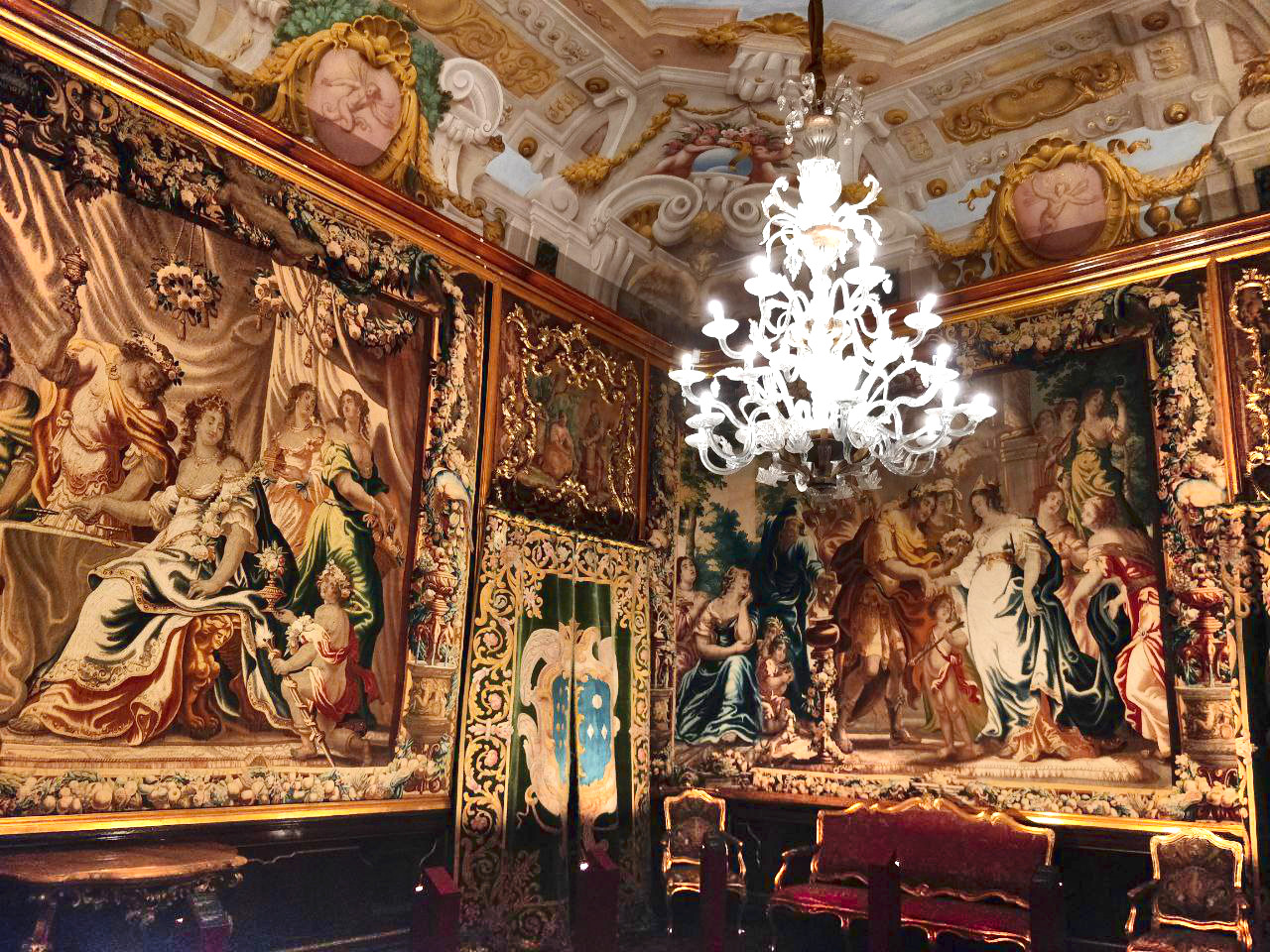
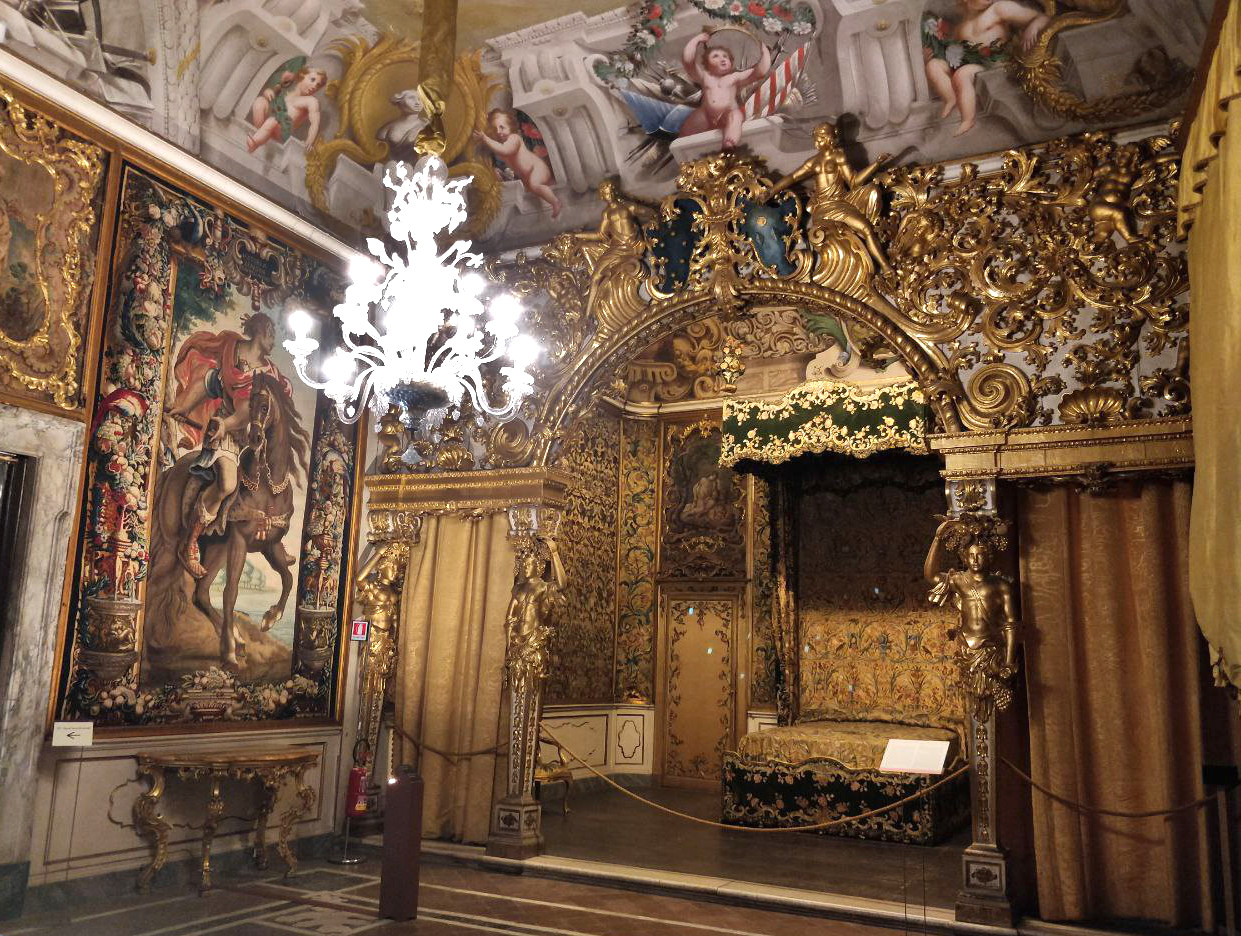
Palazzo Mansi was the residence of the Mansi family from the end of the 16th to the 20th century. It was acquired by the Italian State in 1965 and opened in 1977 as a national museum. It aims at enriching and enhancing the cultural heritage in its custody, as well as to promote the enjoyment of its collections. Our visit focuses only on a part of its exhibits, the apartments of the Mansi family on the first floor. In the map below, the path indicated by the blue and red lines on the maps represents the route to be followed by visitors: it goes through Galleria nuova, Sala della Musica, Salotti di Parata, and finally the Alcova.
Context: Other Locations
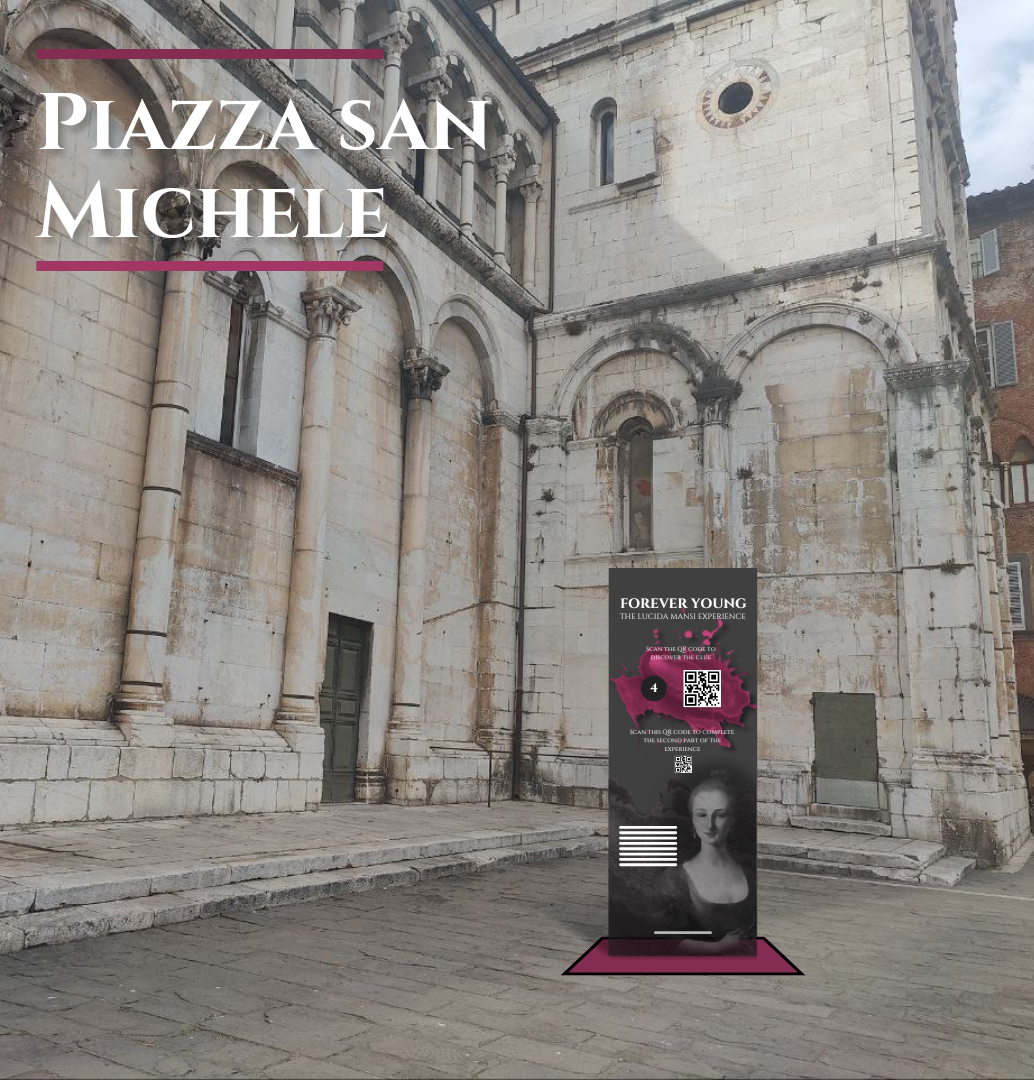
Within Lucca and under the jurisdiction of the City council are the other locations involved in Forever Young: mainly the Clock Tower (Torre delle Ore), but also squares like Piazza Giovan Domenico Mansi (next to the Church Santa Maria Corteorlandini), Piazza del Salvatore (Fontana della Pupporona) and Piazza San Michele.
Context: Cultural Assets
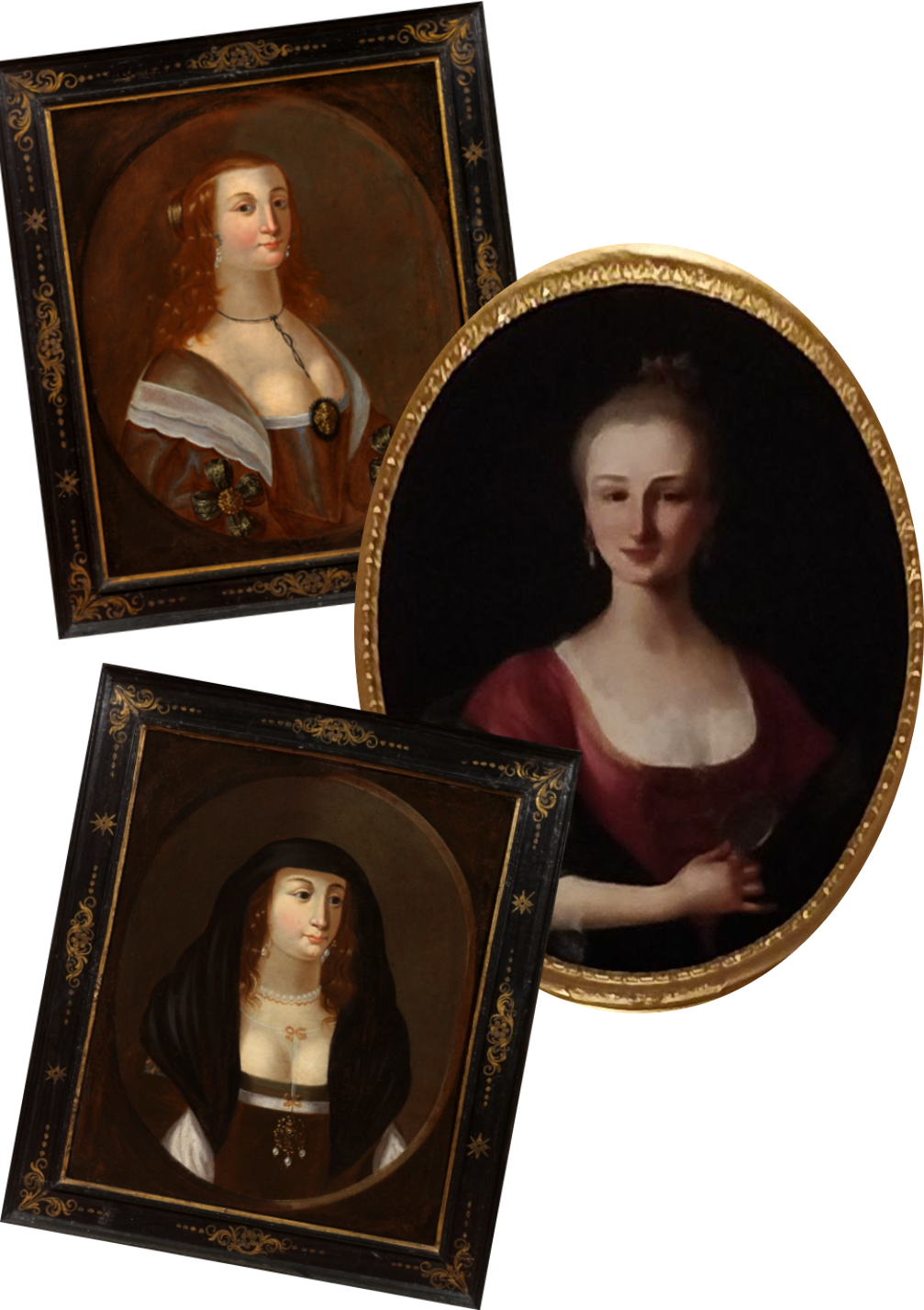
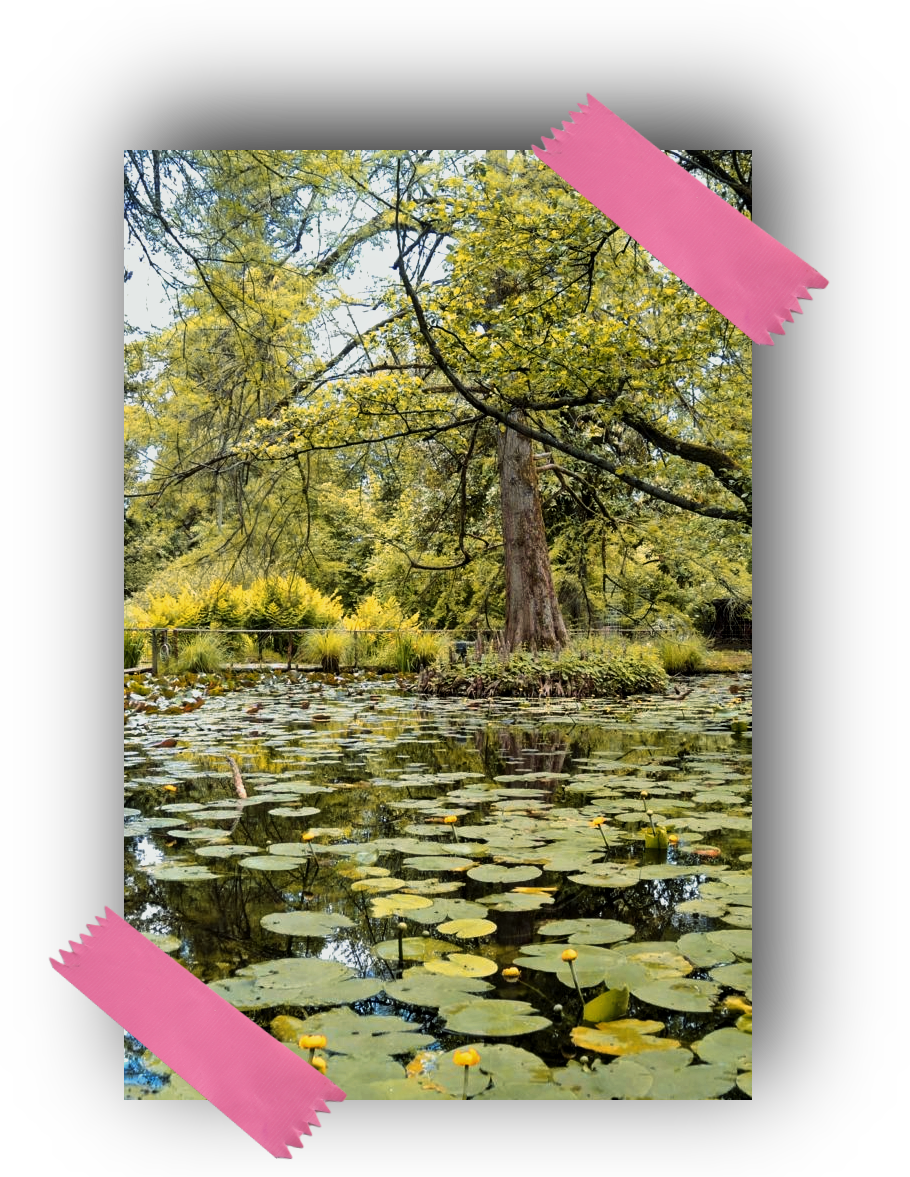
We identified as further relevant cultural assets the Legend of Lucida Mansi, her mysterious supposed portraits throughout the years, and one of the most interesting institutions of Lucca, the Botanical Garden.
Concept: Target Audience
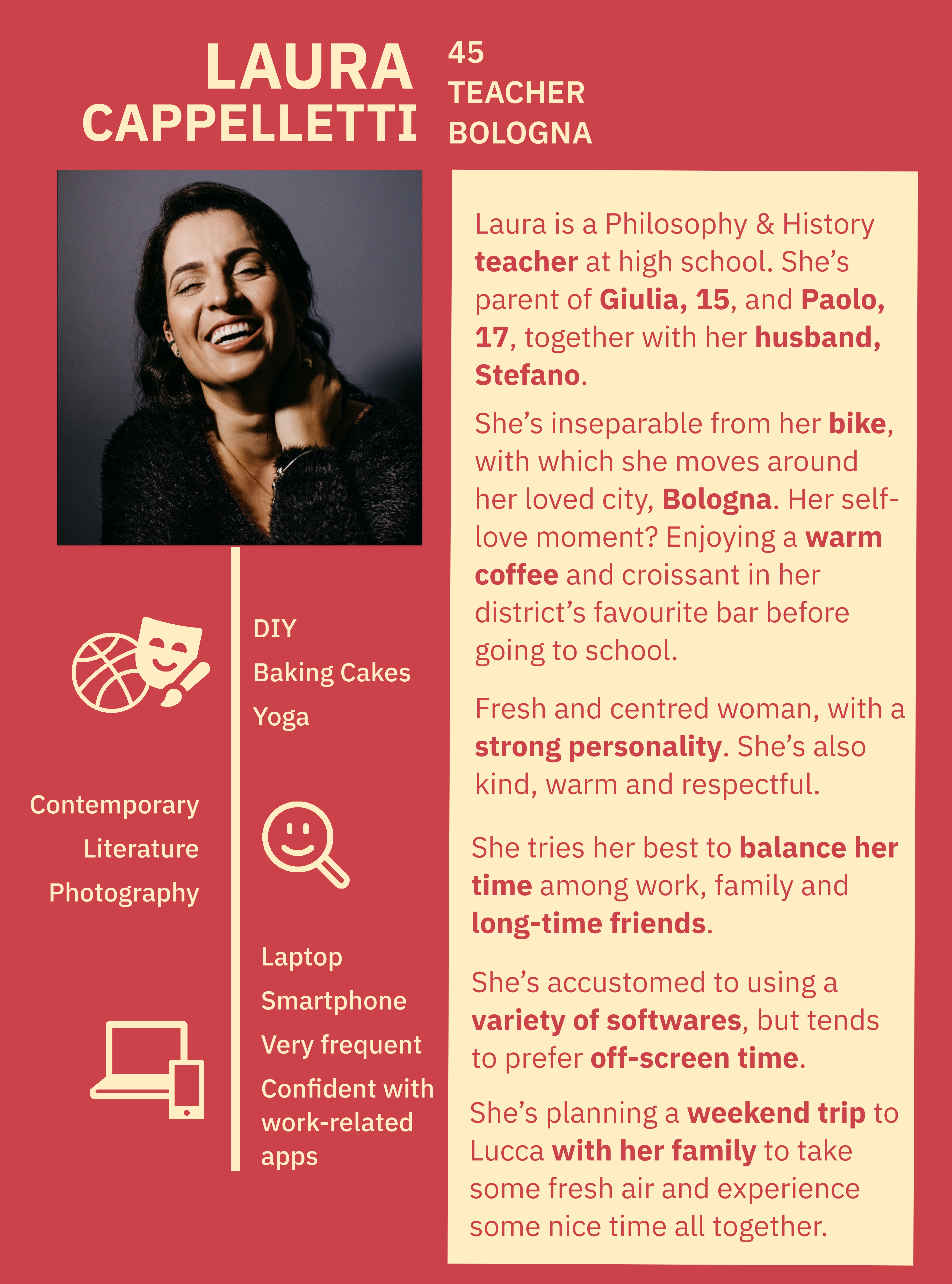
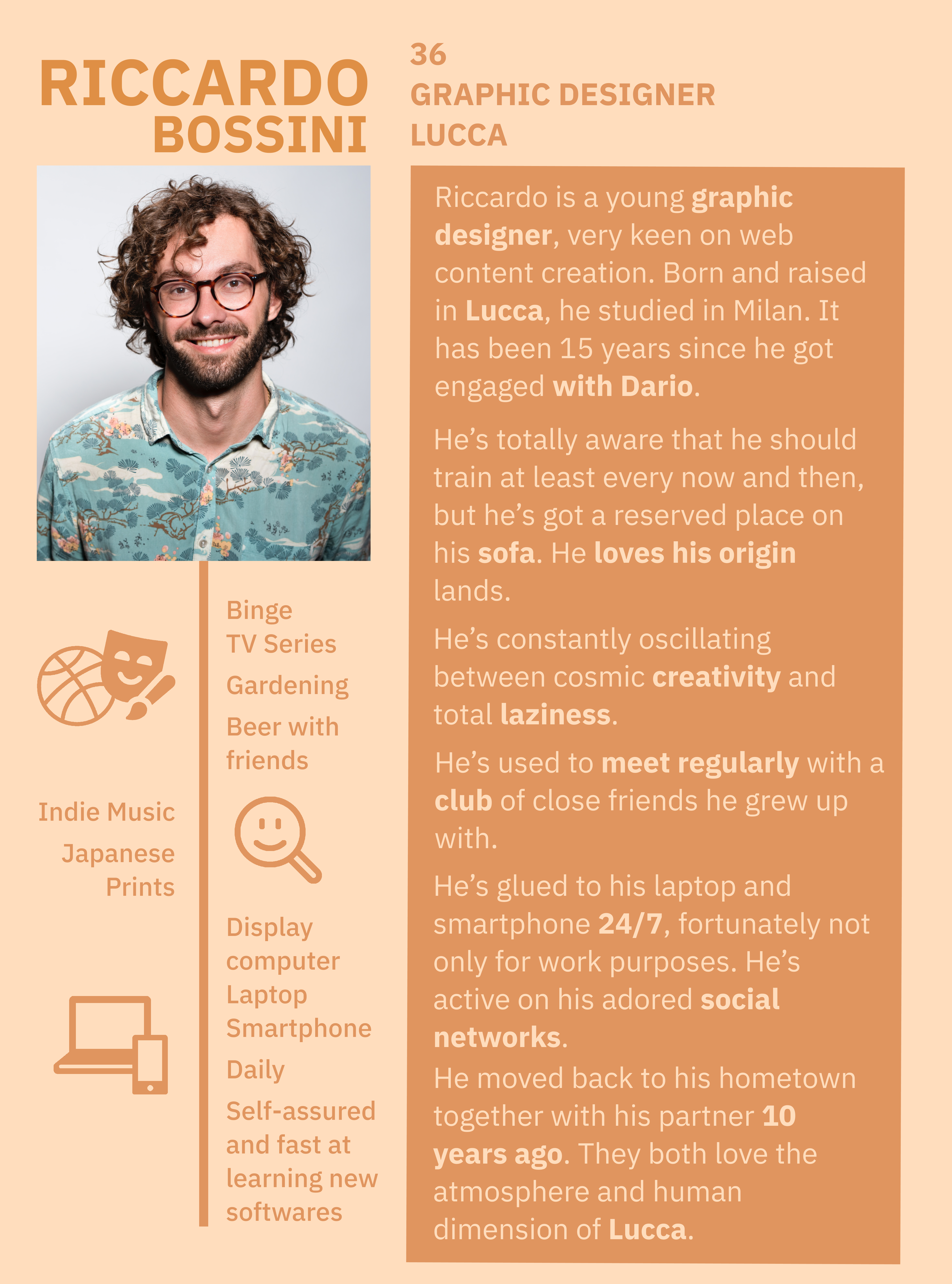
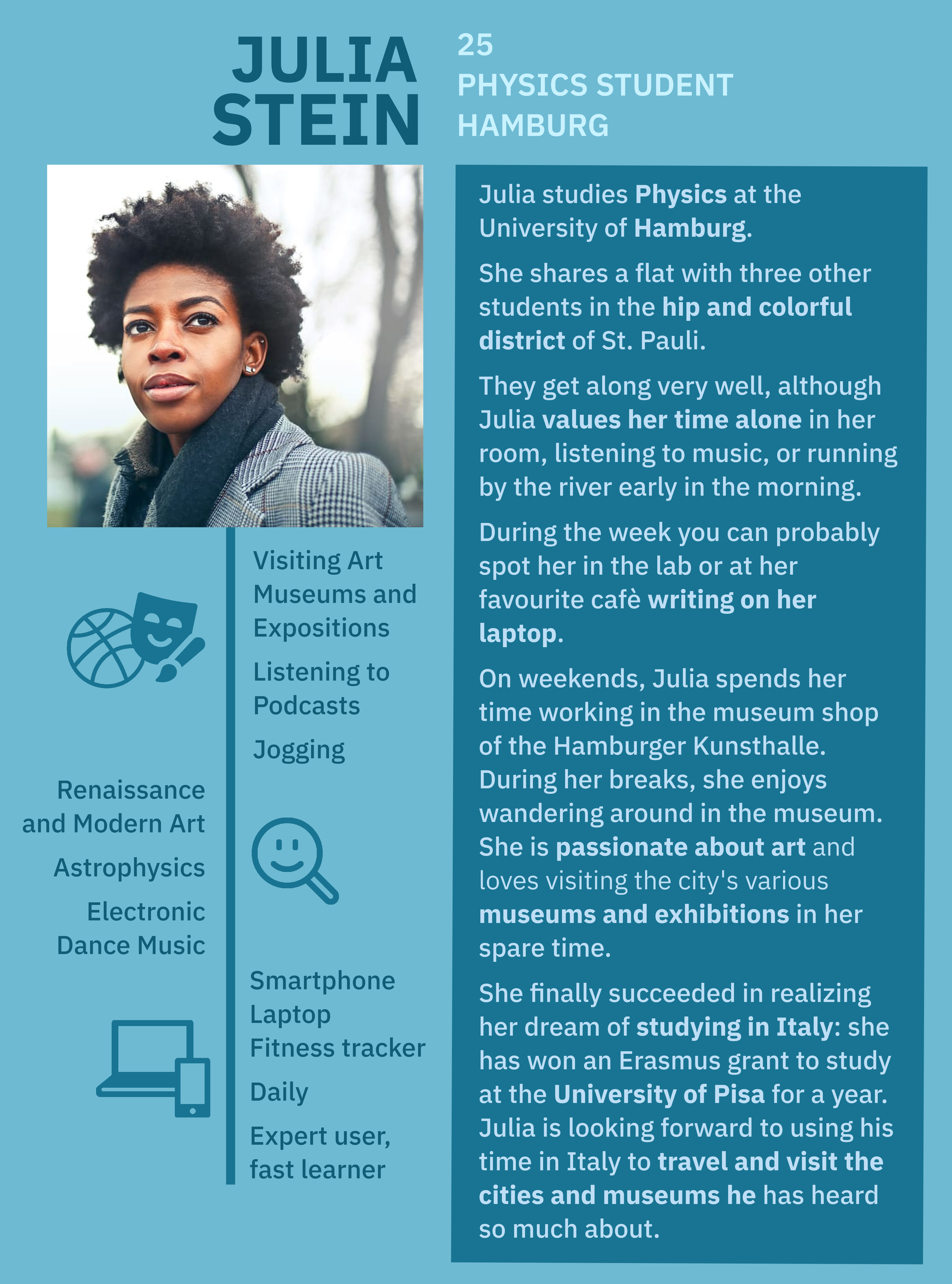
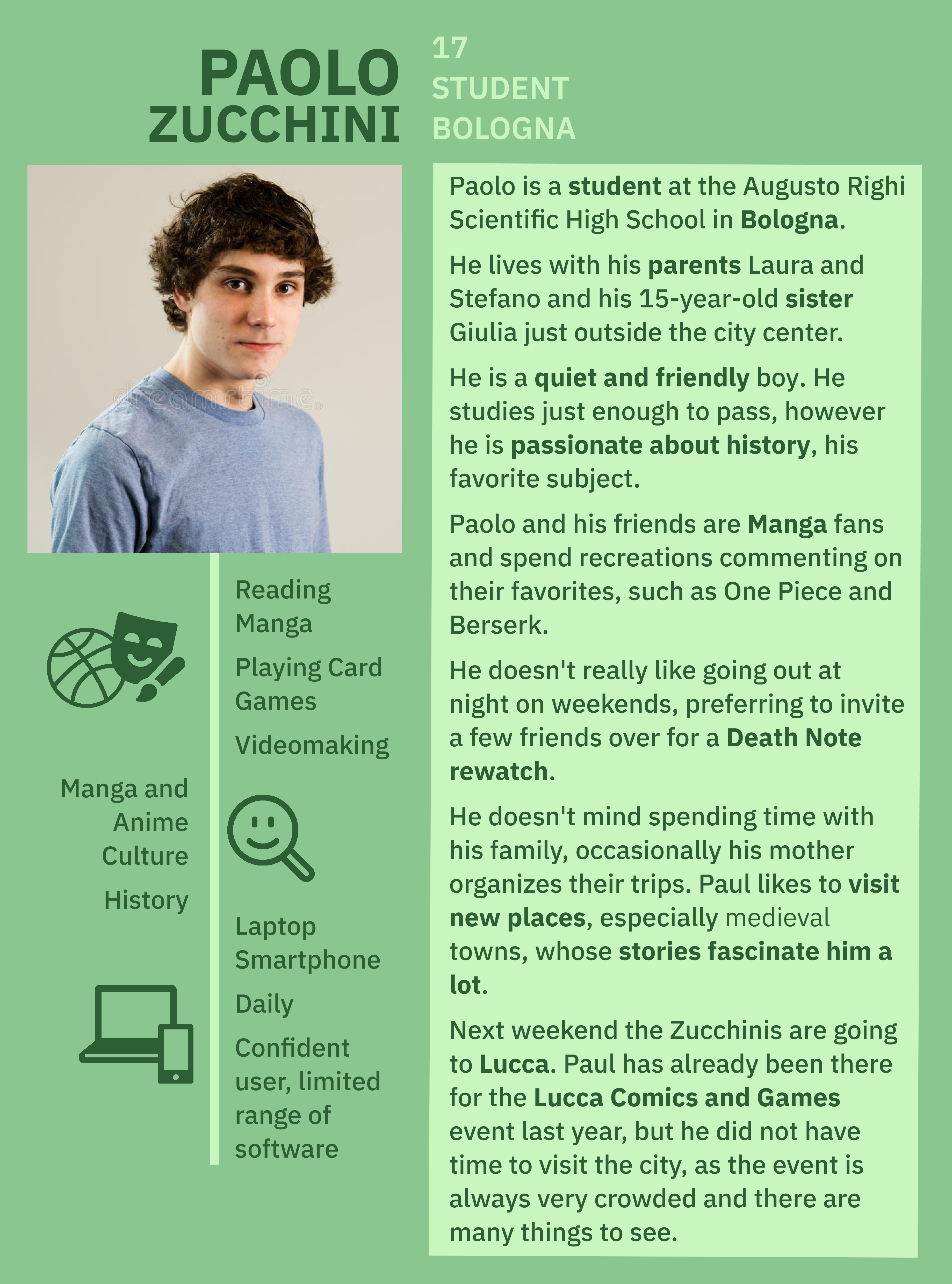
We identified four possible users and population segments: families with adolescent children (aged 15+), young people, tourists from abroad and comics lovers.
We followed the Ideation Cards flow to better clarify our design and proceeded then with the creation of four personas, one for each target user. Click on the pictures to see the details related to each persona.
Concept: Museological Approach
We used as reference model the museological approaches taxonomy provided by Caraceni (2015), with its attention to the need of the institution, the type of interaction, the openness/closedness of the space, the content, the interaction between real and virtual and the possibility of visitor contribution. We also considered the mission and priorities of the cultural institutions involved.
This way, we identified and described Forever Young as part of “Category C”, i.e. Virtual museum enhancing museum exhibitions with open interaction in a closed space showing selected objects from the museum collection, not allowing visitor contributions.
| Need | Exhibition |
| Interaction | OPEN (‘gesture based’) inside the galleries |
| Space | Closed |
| Content | Selected objects |
| Virtual/Real | Real with virtual |
| Visitors Contributions | Not Allowed |
Concept: Cognitive Approach
Given the historical-cultural context and the very starting point of our project idea, i.e. the legend of Lucida, we accounted language-narrative as the foremost cognitive aspect to consider. However, we assumed issues concerning meaning-making, empathy and emotions, memory and recall, worthy of focus and attention, as well. In fact, these were all nuances that we wanted to let emerge from the interactive experience.